

Metering pump selection is not only about flow rate. Pressure, media corrosiveness, temperature, duty cycle and on-site control requirements all affect the pump type, wetted materials and sealing design. This article sets out the selection process along four key dimensions.
Start with the Process Parameters
Before selection, define the maximum, normal and minimum flow rates, the discharge pressure, and the medium name, concentration, temperature and whether it contains particles. Keep a sensible margin on flow and pressure, but avoid simply oversizing, which can reduce the turndown range or raise energy consumption.
Wetted materials chosen for the medium
For standard water-treatment chemicals, engineering plastics or metal materials are usually sufficient; for highly corrosive media, choose PTFE, PVDF or 316L according to compatibility. Where the medium contains particles or tends to crystallise, also consider the valve ball, valve seat and line flushing method.
Matched pump type and control method
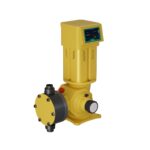
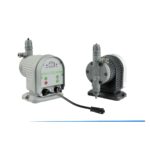
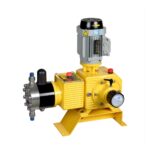
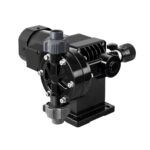
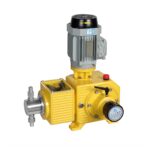
Mechanical diaphragm pumps suit standard continuous dosing; plunger and hydraulic diaphragm pumps suit high-pressure duty; digital metering pumps make flow display and automatic control easy; solenoid pumps suit low-flow, small-scale systems. Explosion-proof or VFD requirements should be raised at the selection stage.
Allow space for installation and maintenance
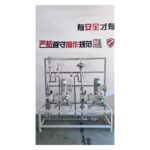
Allow space on site for the chemical tank, piping, valves, pulsation dampener and maintenance access. For a complete dosing system, also confirm the base dimensions, power supply, earthing and drainage conditions.

 Scan to chat on WeChat
Sales & technical support, 08:30–18:00 (GMT+8)
 English
 简体中文
 Español
 Français
 Português
 العربية
 Русский
 日本語
 한국어
 Tiếng Việt
 ไทย
 Türkçe